Category: Dailies
Stretch-run starters for hire
Right around this time last year, relatively un-owned young hurlers
like Wade LeBlanc, Clay Buchholz, Wade Davis, Homer Bailey and Robinson Tejeda (yep)
were revving things up to bolster the stretch run for any fantasy teams lucky
enough to grab ’em. Naturally, in “The Year of the Pitcher”, there’s currently a new and
improved crop that offer a lot more upside — specifically in
the strikeout department — than last year’s late-blossomers, and there’s
plenty who are available in over 85 percent of Yahoo! Leagues…
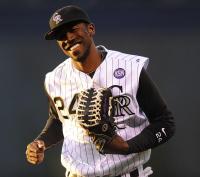
Jhoulys Chacin, Rockies: 6-9,
3.98 ERA, 1.28 WHIP, 102 Ks in 95 innings
Five percent owned in Yahoo! Leagues

It’s been a strange ride for Jhoulys this season. After battling to a solid 3.61 ERA through his first 12 outings,
the 22-year-old struggled to a 6.75 clip over seven appearances after he was questionably
shifted to the ‘pen in early July. Chacin was
consequently demoted to Triple-A for three-plus weeks until getting recalled on
August 17, laboring in his first start back. He finally flashed the dominance
he’s capable of on August 22, dealing to the tune of 7 2/3 shutout innings,
allowing just three hits and fanning nine. That should be enough for the
Rockies’ braintrust to finally realize they’re better off with the electric
young stud in the rotation than Jeff Francis and Aaron Cook, so look for Chacin to finish out the year in style.
Mike Minor, Braves: 2-0, 4.00
ERA, 1.17 WHIP, 22 Ks in 18 innings
14 percent owned in Yahoo! Leagues
The rookie southpaw opened some eyes on Sunday by striking out 12 Cubs
hitters in six victorious innings of work, improving his stellar K/BB ratio to
22/4 over three career starts. Minor has completely owned left-handed hitters
in his short stint, holding them to a .154 average and just one extra-base hit.
The talented 22-year-old was 4-1 with a
1.89 ERA and 37 Ks in 33 1/3 innings in Triple-A before his promotion on August
7, so his relative dominance thus far is no fluke. Yes, the Braves announced
they’d be skipping Minor’s next start to give him some extra rest, but he’s
only tossed 128 1/3 total innings in 2010 so they’ll likely give his electric stuff free reign
going forward as they fight for a playoff spot.
Homer Bailey, Reds: 3-2, 4.52 ERA, 1.32 WHIP, 51 Ks in 63 2/3 innings
12 percent owned in Yahoo! Leagues
Ownership plummeted while Bailey experienced an extremely disappointing
first 3 1/2 months of the season, but he’s starting to look like a repeat
offender on this list. As the Weekly 10 so eloquently pointed out, the
24-year-old has been stellar in two starts since returning from the DL on
August 15, going 2-0 with a 0.69 ERA, 0.69 WHIP and a 10/2 K/BB ratio over 13
frames. Despite a rough first 16 starts to 2010, Bailey looked like he was starting
to right the ship by firing 16 innings of two-run ball in two outings before getting
injured in late May. Remember, it was the right-hander’s stellar 6-1 record and 1.70
ERA after August 23 of ’09 that had him pegged as a huge sleeper heading into
this year, so it’s not unreasonable to expect big things going forward.
Bud Norris, Astros: 6-7, 5.23 ERA, 1.43 WHIP, 112 Ks in 105 innings
Eight percent owned in Yahoo! Leagues
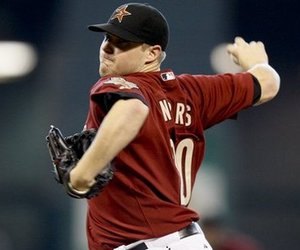
Clearly, those season numbers don’t look very appealing. But look
closer, and Norris is 4-0 with a formidable 3.31 ERA and 0.93 WHIP over his
last nine starts. That includes consecutive seven-inning, two-run gems, the
first being a 14-strikeout explosion on August 14. The burly, hard-throwing right-hander’s
effectiveness is starting to catch up with his already stellar 9.45 K/9 rate, which is good for seventh in the Majors for pitchers with a minimum of 100 innings
thrown. Norris is just starting to figure out big league hitters at age 25, and
though you might not want to play him in Philly on August 24, his following
start against the offensively-challenged Mets is looking might juicy.
Joe Blanton, Phillies: 5-6, 5.32 ERA, 1.43 WHIP, 95 Ks in 132 innings
14 percent owned in Yahoo! Leagues
Another stocky right-hander with ugly overall numbers, Blanton has
started to find a groove. The 29-year-old has posted a 3.12 ERA with a 23/4
K/BB ratio over his last four starts, including 16 Ks with no walks over the
last two. Blanton struggled so much through the season’s first four months that
many forgot how solid he was last in 2009, which included a stellar 5-2 stretch
with a 2.14 ERA between July and August. It’s looking like a comparable run may
be on the horizon.
Jake Westbrook, Cardinals: 7-8, 4.48 ERA, 1.32 WHIP, 99 Ks in 152 2/3
innings

14 percent owned in Yahoo! Leagues
Like Blanton, Westbrook doesn’t have the youthful freshness of the
first four hurlers, but his recent performance needs to be addressed. After a deadline
trade from the Indians, Westbrook has predictably thrived under the tutelage of
pitching coach Dave Duncan with a 3.60 ERA, a 1.08 WHIP and a 26/4 K/BB ratio
over four starts. The shift in leagues has transformed Westbrook into more of a
strikeout maven than ever imaginable, as his current 9.36 K/9 rate in 25
innings is almost double the 32-year-old’s career mark of 5.02. He’s only 1-1
with the new club, but more wins should be in store when September roles
around.
Position Battles – Shortstop Edition
Position Battles – Outfield Edition
Productive Performances
 Any true follower of baseball statistics knows that what constitutes a “Quality Start” is completely bogus. It doesn’t take a math whiz to calculate that six innings and three earned runs equates to a 4.50 ERA, which is pretty much mediocre to bad, not quality. On the other hand, Clayton Kershaw fires 5 2/3 shutout innings, K’s eight and gets pulled to preserve his arm because his team is up 14-0 in the sixth, well, no Quality Start for him.
At the very least, if a pitcher throws a quality start it usually means he’s keeping his team in the game, so the stat isn’t completely devoid of value in the real world. But in the Fantasy World, QS is a term that should never be uttered or written. It takes no account of WHIP or strikeouts, and no one wants a guy with an ERA much north of four on their roster.
So let’s create with a term that represents a valuable outing from a fantasy starter in a league with the typical five pitching categories. We’ll keep it simple and call it Productive Performances. I thought Fruitful Fantasy Flings, while more artistic, was a little over the top (suggestions welcome).
If you don’t feel like taking the time to understand the convoluted way I came up with this term, skip down to the rankings. All you need to know is that a Productive Performance is an outing that appreciably benefits a fantasy team’s pitching totals without damaging any one particular category.
To earn a Productive Performance (PP), a pitcher needs to positively contribute in three out of the four categories that starters impact – Wins, ERA, WHIP and Ks – and the ERA for that start must be 4.50 or below. Here are the standards I’ve come up with needed to qualify as positive – basically an above-average output that legitimately helps a team’s weekly totals in that category:
-
A win
-
An ERA of 3.68 or below (Allowing three earned runs over 7 1/3 innings equates to a 3.68 ERA)
-
A WHIP of 1.29 or below
-
At least five strikeouts
However, if a pitcher qualifies in only two of the categories, but one of them is an exceptional output, he will notch a PP as long as his ERA and WHIP are both equal to or below 4.50 and 1.50, respectively. Stay with me here…
Here is what qualifies as exceptional:
-
A win
-
An ERA of 3.00 or below
-
A WHIP below 1.00
-
At least 7 Ks
There are two other specific types of outings that qualify: Because why not make this more confusing? If the starter allows three earned runs over exactly seven innings (ERA of 3.86) while earning a win and keeping his WHIP at 1.65 or below, he’ll have netted a Productive Performance regardless of his strikeout total. Also, any time a guy throws at least six innings without allowing an earned run, it’s a PP no matter what the other numbers are like. These performances are just too valuable in the real world to ignore.
OK then…here are the top-10 ranked pitchers in Productive Performances this season:
- What stands out here is that King Felix has not exactly been the elite fantasy force that his American League-leading 19 Quality Starts would try to suggest. Also, CC Sabathia, Chris Carpenter an
d Matt Cain, all ranked in the Top-9 in Quality Starts, are nowhere to be seen on this list. You may not have realized it, but Carl Pavano and Brett Myers have been killer fantasy starters all year.
Finally, so you can get some use out of all this confusion, here’s a list of starters available in at least 70 percent of Yahoo! leagues with the most PPs over the last two months:
Jon Niese – 7
sp;
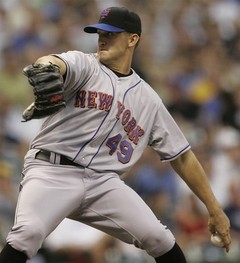 All these guys are very useful for spot starts, while Niese, Mazzaro, Davis, Westbrook and Wood should garner serious consideration in all formats.
Position Battles – Third Base Edition

Cust-omized for power
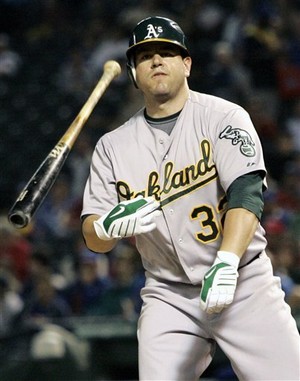
Position Battles Premier Week – First Base
With the start to the second half feeling a little stagnant in Fantasyland, I decided to a add a little wrinkle to this blogging situation. Some of the most pivotal, make-or-break situations during a season come when deciding between two players at a certain position of need to pickup off the waiver wire. Case in point: When Curtis Granderson went down with an injury back in early May, I was looking for an outfield replacement with a little speed and pop. Cameron Maybin and Chris Young were both sitting out there, and I foolishly grabbed Maybin based on his “upside” and Young’s disappointing last couple seasons. Well Maybin’s enjoying life at Triple-A right now I could sure use C.Y.’s 17 homers and 19 steals.
Although I may have just destroyed my credibility, I figured I’d install a weekly feature examining the top contenders widely available at whichever position(s) are making waves that week. To help prevent you from making the same mistake I made with Maybin, I’ll try to determine which guy is best to own going forward. So here goes nothing….
Edition 1 – First Base
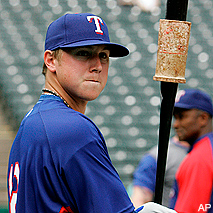
The Champ: Justin Smoak, Mariners – .212-10-38, 11 percent owned in Yahoo! Leagues
 The Skinny
It’s kind of shocking how available Smoak is right now, considering all the media love he’s gotten this year after a much anticipated call-up in April and his inclusion in the Cliff Lee trade on July 9. A lot of that has to do with The 23-year-old’s 5-for-49 skid over his last 11 games with the Rangers and first three with the M’s. But the talented switch-hitter got a jolt of life during the break and has emerged with two homers and three multi-hit games since, renewing his buzz as a hot pickup.
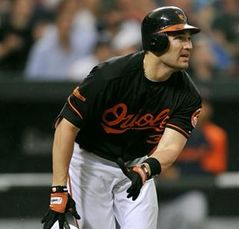
Challenger: Luke Scott, Orioles – .285-14-34, 14 percent owned in Yahoo! Leagues
 The Skinny
Primarily a designated hitter but eligible at first, Scott was on the DL for the first half of July with a hamstring pull, causing his ownership to take a huge hit. The 32-year-old lefty batsman returned on July 19 and has gone 6-for-12 with a two-homer game and four ribbies. Averaging 24 homers and 71 RBIs over the last two seasons, Scott is one of the streakiest hitters in the game. This is possibly the best and worst thing about him. A 15-for-33, six-homer, 10-RBI stretch over nine games in May can carry a fantasy team, but a .194 average like he had in April can seriously hamper one.
Root-ability
These two guys couldn’t be more polar-opposites. You have the toolsy mega-prospect oozing with “potential” vs. the uninspiring veteran with a limited upside. While there’s something sickly endearing about a guy who chops down trees in the offseason to keep his swing in gear, Scott has been a boring name dating back to his days in Houston, and no one really loves owning a guy on the Orioles. There’s nothing more gratifying than watching a youngster like Smoak emerge as a fantasy force on your own squad. Plus he’s got that name with endless possibilities for puns, and it appears some people on this very site have gone so gitty with it that they’ve replaced all usage of the actual word with the OAK version. Justin wins here.
Future
Scott is a noticeably better hitter after the All-Star break, batting .275 with an .868 OPS compared to .260 and .839 in the first half. Smoak’s value took a nice little hit after being traded from a beastly offense at the Hitter’s Haven in Arlington to a lineup with Franklin Gutierrez as their three-hitter at spacious Safeco Field. As streaky as Scott can be, he’s actually hit .321 since the calendar turned May with a plus-nine OPS in each month. Smoak’s 16/2 K/BB rate in nine games with the Mariners isn’t incredibly promising, and he might need some more seasoning before reaching that immense potential everyone seems to agree he possesses. Smoak is definitely the more tempting option here, but it seems like the wiser move is to go for Scott — you kinda know what you’re gonna get.
So if you have Justin Morneau sitting on your DL, or if you’re fed up with an ice-cold Troy Glaus who’s magic has worn off, Luke Scott has emerged as the guy you want to scoop up at first base for now.
Winner: Luke Scott
Youth slow to be served in Chi-Town
Normal
0
false
false
false
EN-US
X-NONE
X-NONE
MicrosoftInternetExplorer4
/* Style Definitions */
table.MsoNormalTable
{mso-style-name:”Table Normal”;
mso-tstyle-rowband-size:0;
mso-tstyle-colband-size:0;
mso-style-noshow:yes;
mso-style-priority:99;
mso-style-qformat:yes;
mso-style-parent:””;
mso-padding-alt:0in 5.4pt 0in 5.4pt;
mso-para-margin-top:0in;
mso-para-margin-right:0in;
mso-para-margin-bottom:10.0pt;
mso-para-margin-left:0in;
line-height:115%;
mso-pagination:widow-orphan;
font-size:11.0pt;
font-family:”Calibri”,”sans-serif”;
mso-ascii-font-family:Calibri;
mso-ascii-theme-font:minor-latin;
mso-fareast-font-family:”Times New Roman”;
mso-fareast-theme-font:minor-fareast;
mso-hansi-font-family:Calibri;
mso-hansi-theme-font:minor-latin;
mso-bidi-font-family:”Times New Roman”;
mso-bidi-theme-font:minor-bidi;}
Something perplexing has been going on in the Windy City of late. Neither
the White Sox nor the Cubs have what you would call a glut of youthful
offensive talent, and neither lineup is much of an offensive juggernaut. This
makes it all the more maddening when the teams’ respective managers choose to bench young, emerging prospects in favor of zero-upside, unproductive
veterans. But that’s exactly what Lou Piniella and Ozzie Guillen have done this season, standing in the way of powerful talents Tyler Colvin and Dayan Viciedo
from becoming truly valuable fantasy commodities.
Dayan Viciedo vs. Omar Vizquel
The White Sox threw $10 million at Viciedo as a
19-year-old Cuban defector in 2008, so you’d think they’d be eager to see their
investment pay off. After
putting up a .290-14-34 line in 62 games at Triple-A this year, Viciedo has
hit .295 in 44 at-bats since getting called up on June 18. An
impressive beginning for a 21-year-old, but apparently not impressive enough to
net him consistent at-bats.
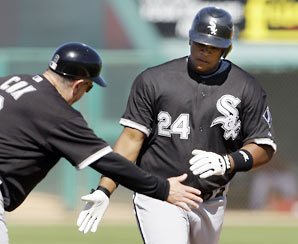
Omar Vizquel, yes, 43-year-old Omar Vizquel with a career .692 OPS
has been stealing away regulars ABs from Viciedo. Vizquel, who has
started just 34 career games at the hot corner, got the nod over Viciedo in three out of four games since the All-Star break. This
comes in the midst of the youngster’s first career hot streak, which has him
batting .364 with a pair of homers and doubles and seven runs scored over
his last six games.
Maybe manager Ozzie Guillen, a light-hitting middle-infielder in
his day, is trying to live vicariously on the field through his old friend Vizquel.
And yes, Viciedo isn’t Mike Schmidt over at third, evidenced by his costly error on July 16. But once Guillen finally commits to Viciedo, he should have something pretty solid.
At 5-foot-11, 240 pounds, Viciedo generates a lot of power from his extremely stocky
frame, and is literally a well-rounded hitter. Think Juan Uribe with a much better
average. There’s also something to be said about the production potential
of a guy who always puts
the ball in play, as he’s struck out just four times and walked none in his
short big-league stint. Sitting on the bench must be twice as frustrating for a guy who loves to swing as much as Viciedo does, so hopefully for his sake he’ll get more run in the second half.
Tyler Colvin vs. Kosuke Fukudome and Xavier Nady
This one has been even more confounding, as the offensively-starved Cubs have
nothing to lose at this point from giving at-bats to a rookie. Cubs fans feel the same way, as they’ve gone
nuts all season begging Lou Piniella to play their 2006 No. 1 Draft pick over the
33-year-old Fukudome’s career .257 average, and journeyman Nady’s .223 season
clip.

Piniella vowed to do so about a month ago, but was slow to come through on his promise,
as Colvin started just two of the team’s last five games before the break. It’s not like
Colvin, a lefty batsmen, is better suited for a platoon, as he’s actually fared
better against southpaws this season with a .300 average.
Other than the money the Cubs are giving to Kosuke and Xavier,
there’s really no explanation for slotting either of them in the lineup over a budding
power bat who put up a .300-14-50 line in 84 games at Double-A last season. The
24-year-old Colvin has been a legit producer when given the chance to play in Chicago, going deep 12 times with 32 RBIs and 33 runs scored in just 196
at bats in 2010. Spread that out over a full season, and you get a 35-100-100 fantasy force . It’s a crime to hold back youthful pop of this nature, especially
on a team that’s going nowhere.
Luckily, Piniella seems to have gotten a clue during the
vacation and has started Colvin in the Cubs’ first four games of the second half, during which he’s gone 6-for-17 with a pair of doubles and runs scored. He was even slotted in the leadoff spot to face Roy Halladay on Sunday night, and responded with a 3-for-5 effort. If this is going to be the norm you won’t want to hesitate on Colvin like his own team did, so scoop the youngster up while he’s available in 93 percent of Yahoo! leagues.
Follow
@FanInterference on Twitter
Second-half Speedsters
Normal
0
false
false
false
EN-US
X-NONE
X-NONE
MicrosoftInternetExplorer4
/* Style Definitions */
table.MsoNormalTable
{mso-style-name:”Table Normal”;
mso-tstyle-rowband-size:0;
mso-tstyle-colband-size:0;
mso-style-noshow:yes;
mso-style-priority:99;
mso-style-qformat:yes;
mso-style-parent:””;
mso-padding-alt:0in 5.4pt 0in 5.4pt;
mso-para-margin-top:0in;
mso-para-margin-right:0in;
mso-para-margin-bottom:10.0pt;
mso-para-margin-left:0in;
line-height:115%;
mso-pagination:widow-orphan;
font-size:11.0pt;
font-family:”Calibri”,”sans-serif”;
mso-ascii-font-family:Calibri;
mso-ascii-theme-font:minor-latin;
mso-fareast-font-family:”Times New Roman”;
mso-fareast-theme-font:minor-fareast;
mso-hansi-font-family:Calibri;
mso-hansi-theme-font:minor-latin;
mso-bidi-font-family:”Times New Roman”;
mso-bidi-theme-font:minor-bidi;}
With guys like Grady Sizemore, Rajai Davis, Julio Borbon and
Jacoby Ellsbury not exactly having the dynamic first three months everyone
expected, many fantasy owners have been left searching for some cheap sources
of speed. With that in mind, here’s some guys who could be available that should help you out on the basepaths, provide a solid average and score a bunch of
runs over the season’s second half:
Angel Pagan: .315, 19 steals, 46 runs, six homers, 40 RBIs in first half
Normal
0
false
false
false
EN-US
X-NONE
X-NONE
MicrosoftInternetExplorer4
/* Style Definitions */
table.MsoNormalTable
{mso-style-name:”Table Normal”;
mso-tstyle-rowband-size:0;
mso-tstyle-colband-size:0;
mso-style-noshow:yes;
mso-style-priority:99;
mso-style-qformat:yes;
mso-style-parent:””;
mso-padding-alt:0in 5.4pt 0in 5.4pt;
mso-para-margin-top:0in;
mso-para-margin-right:0in;
mso-para-margin-bottom:10.0pt;
mso-para-margin-left:0in;
line-height:115%;
mso-pagination:widow-orphan;
font-size:11.0pt;
font-family:”Calibri”,”sans-serif”;
mso-ascii-font-family:Calibri;
mso-ascii-theme-font:minor-latin;
mso-fareast-font-family:”Times New Roman”;
mso-fareast-theme-font:minor-fareast;
mso-hansi-font-family:Calibri;
mso-hansi-theme-font:minor-latin;
mso-bidi-font-family:”Times New Roman”;
mso-bidi-theme-font:minor-bidi;}
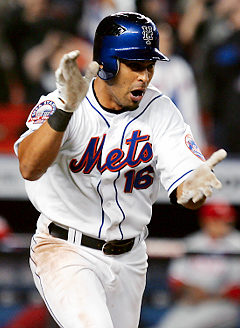
There cannot possibly be a more productive fantasy player
thus far who has gotten less respect than Pagan. In 154 games since taking over as the Mets everyday
center fielder on July 10 of 2009, the 29-year-old has hit .309 with 12 homers,
29 steals, and 93 runs scored. And even though he’s batting .419 with 14 RBIs and seven
swipes over his last 18 starts, he’s still owned in just 46 percent of Yahoo! leagues. This could be because of the uncertainty
about Pagan’s playing time in a soon-to-be crowded outfield when Carlos Beltran
returns, but get one thing straight:
Jeff Francoeur might be the coolest guy around, inspiring everyone to hold hands and sing in the clubhouse, but that won’t be enough to keep his weak
.253 average in a struggling lineup over a
proven .300 hitter with legit speed and power.
Pick up Pagan.
Corey Patterson: .289, 16 steals, 28 runs, five homers, 21 RBIs in first half
Come on, people — please stop ignoring Corey Patterson. The retread veteran
widely considered as a busted prospect has been playing every day in the Orioles
outfield and quietly doing his own Carl Crawford impression over the last
month. In 111 at-bats since June 11, the
30-year-old (not lying, he’s only 30) is batting .333 with 10 steals, two
homers, nine doubles, 15 runs scored and 15 RBIs. He’s always had the talent, so who knows,
maybe he’s a guy who just needed 10 years to develop it. One thing’s for sure is that even if
Patterson’s bat cools off the speed will be there, as he’s averaged 50 steals
per 162 games in roughly 2 ½ seasons with the O’s.
Erick Aybar: .283, 14 steals, 52 runs, three homers, 16 RBIs in first half
After being touted as a solid fantasy shortstop option heading
into 2010, Erick Aybar batted just .238 over the first 54 games and became an
afterthought in most formats. Then
something clicked, and in 28 contests since June 3 Aybar is batting .365 with seven
steals and 22 runs scored. Don’t let that
extra ‘K’ in his name give you the wrong impression, as the quick-swinging switch-hitter
has impressively struck out just once in 45 July at-bats. This 26-year-old is available in 46 percent of
Yahoo! leagues, and looks primed for a productive second half.
Cliff Pennington: .264, 13 steals, 38 runs, three homers, 27 RBIs in first half
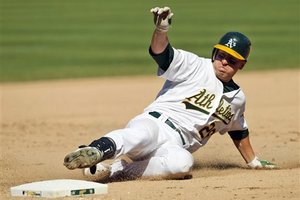
As far as sexy fantasy pickups go, the A’s Cliff Pennington might
as well be your sister. But since
batting an even .200 after the team’s first 61 games, the 26-year-old shortstop
has done wonders to his attractiveness over the last month. In 88 at-bats since June 10, Pennington is
batting an incredible .409 with six steals and 19 runs scored. Putting up a 1.047 OPS in July, he’s bound to
move up from ninth in the order real soon, which should enable him to score enough
runs to offset his lack of power. With
the shortstop position looking pretty thin so far in 2010, Pennington is definitely a guy to
consider grabbing in AL-only leagues at the very least.
Denard Span: .273, 16 steals, 54 runs, three homers, 37 RBIs in first half
Normal
0
false
false
false
EN-US
X-NONE
X-NONE
MicrosoftInternetExplorer4
/* Style Definitions */
table.MsoNormalTable
{mso-style-name:”Table Normal”;
mso-tstyle-rowband-size:0;
mso-tstyle-colband-size:0;
mso-style-noshow:yes;
mso-style-priority:99;
mso-style-qformat:yes;
mso-style-parent:””;
mso-padding-alt:0in 5.4pt 0in 5.4pt;
mso-para-margin-top:0in;
mso-para-margin-right:0in;
mso-para-margin-bottom:10.0pt;
mso-para-margin-left:0in;
line-height:115%;
mso-pagination:widow-orphan;
font-size:11.0pt;
font-family:”Calibri”,”sans-serif”;
mso-ascii-font-family:Calibri;
mso-ascii-theme-font:minor-latin;
mso-fareast-font-family:”Times New Roman”;
mso-fareast-theme-font:minor-fareast;
mso-hansi-font-family:Calibri;
mso-hansi-theme-font:minor-latin;
mso-bidi-font-family:”Times New Roman”;
mso-bidi-theme-font:minor-bidi;}
Denard Span had it in for fantasy players early on. Not only did he drive his owners nuts in the first half after
getting a ton of preseason hype, he managed to take down this season’s second-most formidable
Beat the Streak challenger at 41 games. The fleet-footed center fielder has been given up on in
a surprising number of leagues after batting just .247 with three steals since
June 1. But before you cut bait keep in mind that Span is a second-half performer by nature, as he turned it on last season by batting .331 with a .402 on-base percentage after
the All-Star break, which included a .375 clip in August while swiping
four bags. A similar post-break hot streak
seems likely as he gets that .273 average up to his .296 career clip, and
continues the march towards 30 stolen bases.
You can probably get him for a bag of balls right now from a frustrated
owner.
Coming soon: Post-break Power
Matchup Man
Normal
0
false
false
false
EN-US
X-NONE
X-NONE
MicrosoftInternetExplorer4
/* Style Definitions */
table.MsoNormalTable
{mso-style-name:”Table Normal”;
mso-tstyle-rowband-size:0;
mso-tstyle-colband-size:0;
mso-style-noshow:yes;
mso-style-priority:99;
mso-style-qformat:yes;
mso-style-parent:””;
mso-padding-alt:0in 5.4pt 0in 5.4pt;
mso-para-margin-top:0in;
mso-para-margin-right:0in;
mso-para-margin-bottom:10.0pt;
mso-para-margin-left:0in;
line-height:115%;
mso-pagination:widow-orphan;
font-size:11.0pt;
font-family:”Calibri”,”sans-serif”;
mso-ascii-font-family:Calibri;
mso-ascii-theme-font:minor-latin;
mso-fareast-font-family:”Times New Roman”;
mso-fareast-theme-font:minor-fareast;
mso-hansi-font-family:Calibri;
mso-hansi-theme-font:minor-latin;
mso-bidi-font-family:”Times New Roman”;
mso-bidi-theme-font:minor-bidi;}
The term “matchup play” gets thrown around a lot in fantasy
circles. It’s not exactly a flattering
term to bestow on a player, denoting that they’re only capable enough to use in
specific situations. Nobody really wants
to own a matchup-play player, resigning to the fact that their lineup isn’t good
enough to completely consist of players who are full-time contributors. Yet, if you can swallow your pride, there are certain
matchup players who are strong enough under certain conditions to genuinely be
worth a spot on your roster.
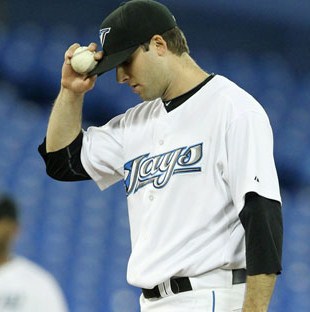
This brings us to Blue Jays starter Brandon Morrow, the
ultimate matchup play this season, who owns a 5-6 record with a 4.69 ERA, a 1.42 WHIP and a 10.03 K/9 rate. The 25-year-old
right-hander, who was acquired from the Mariners in the offseason, has the
talent to be a full-time fantasy stud. Morrow
has a mid-90s fastball with late movement that can be dialed up to 98 if he’s
so inclined, complemented by a nasty breaking ball which fluctuates between
85-90 mph and drops out of the strike zone in a flash. However, currently in his first full season
as a starter after the M’s shuffled him back and forth between the rotation and
the pen last year, the young flamethrower has struggled to find consistency.
Or actually, it might be more accurate to say that Morrow
has been very consistent, as it’s become easy to predict when and when not he
will be effective — the personification of a good matchup play. In eight home starts this season Morrow has
been as dominant as his stuff suggests, going 5-1 with a stellar 2.82 ERA and
1.10 WHIP while opponents are batting just .234 off him. On the road, however, he’s been a disaster, sitting
at 0-5 with a 6.80 ERA and a 1.78 WHIP over nine starts, while opponents have hit .281. The biggest disparity has
been in his control, walking just 13 batters in 51 innings at The Rogers Centre
compared to issuing 32 free passes over 45 frames in U.S. ballparks.
Morrow recently reeled off a masterful five-start stretch during
which he pitched to a 1.80 ERA with a 35/12 K/BB ratio. Four of those outings were in Toronto. He followed this up by yielding five runs in
Cleveland, then surrendering five runs at Yankee Stadium during his most recent
outing on July 4.
Morrow may simply be a guy who needs the warm and fuzzy feeling
of getting cheered to relax and locate the ball where he wants. Or he might just be easily rattled by
trash-talking fans. The again, maybe it’s
an artificial turf thing.
The most notable matchup play from 2009 was a starter who
pitched in the only other artificial turf ballpark currently in the Majors,
Tropicana Field. Also in his first full
year in the rotation, Tampa Bay’s David Price pitched to an 8-3 record with a 2.93
ERA at home last season, compared to 2-4 with a 6.24 ERA on the road. But Price’s tale is one that offers hope for
Morrow, who is not as highly-touted as the former No. 1 overall draft pick and post-season
hero yet has stuff equally electric.
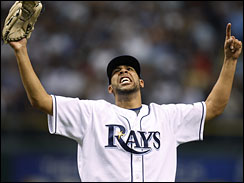
Price was virtually unplayable in fantasy lineups during
his first seven road starts in ’09, racking up a 8.07 ERA. Then something clicked towards the end of the year, as he went 2-0 with a respectable 3.90 ERA in his last four outings away from St. Petersburg. Fast forward to 2010 when Price has been one of
the best pitchers in the American League over the first half, while going 6-3 with a 2.79 ERA on the road.
So as Morrow gears up for road start No. 10 this season,
he should look to Price for encouragement that he can right the ship outside the friendly confines of the country to our north. If this happens, owners will be extremely thrilled
with their investment, as anyone who can ring up 107 Ks in just 96 innings has the
capability to be an elite fantasy starter.
But even if he doesn’t figure it
out on the road, Morrow is one matchup play proven dominant enough under the
right circumstances to keep anyone from feeling ashamed to own him.
 Fan Interference
